ADA Compliant Portable Toilets: Why 5% of Rental Units Must Come
If you lease mobile bathrooms enough time, you stop thinking of them as easy boxes dropped on a jobsite or occasion area. They belong to the general public atmosphere. People depend upon them at wedding events, street fairs, college features, fundraising events, catastrophe action locations, church events, and area celebrations. When a person can not make use of the bathroom due to the fact that the system is too slim, the limit is too tough, or there is no room to transform or transfer safely, the issue is not small. It is instant, personal, and avoidable.
That is why the requirement for accessibility matters so much in mobile sanitation. Under the 2010 ADA Requirements for Accessible Design, as analyzed by the Gain access to Board and the Department of Justice, collections of portable single-user bathroom systems have to consist of easily accessible devices. The policy that captures lots of renters unsuspecting is the 5 percent demand. A minimum of 5 percent of the devices in each collection should come, and that applies also at momentary events.
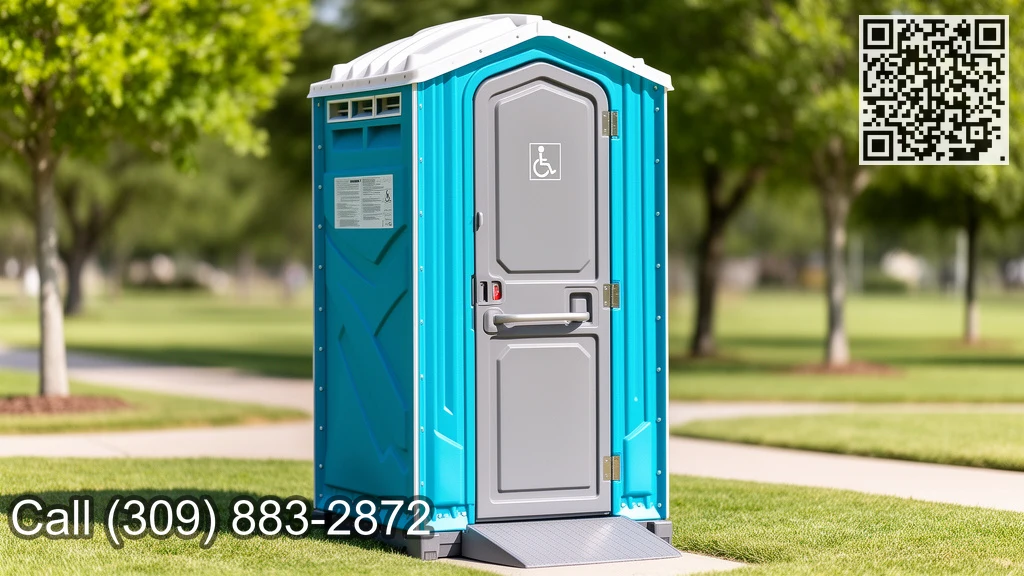
For anyone preparing an ada mobile bathroom leasing, that number is not a pointer and not a politeness upgrade. It is the floor.
The 5% regulation is small on paper, yet vital in practice
When people hear 5 percent, some think the requirement is very little enough to manage later. In real rental preparation, that is where errors start. 5 percent seems little till you equate it right into actual systems. If a site has a collection of 20 portable toilets, at least one have to come. If there are 40, a minimum of two should come. The factor is not simply mathematics. The point is that every collection, not just the event generally, has to be considered.
That tail end matters greater than lots of coordinators understand. I have seen plans where someone claims, "We have one ADA unit on the home, so we're covered." That might feel sensible on a map, yet it misses out on how individuals in fact relocate with a website. If the toilets are set up in numerous separate groups, the obtainable need is linked to every cluster. An individual ought to not have to take a trip throughout an entire fairground due to the fact that the only ada available mobile toilet was placed near the major gate while the closest toilet bank to their seating location has no easily accessible option.
This is likewise why the Gain access to Board's analysis for momentary events is so important. Temporary does not indicate excluded. A one-day festival still creates genuine obstacles if access is dealt with as optional. The same is true for a weekend break sporting activities competition, a seasonal pumpkin spot, or a community block celebration that brings in rental restrooms for a couple of hours. Brief duration does not eliminate the need.
What "accessible" implies is extra particular than "bigger system"
An usual misconception in the field is that any kind of oversize unit counts as an available one. That is not nearly enough. An ada compliant mobile bathroom or ada compliant available portable toilets have to satisfy access needs, not just supply added square footage.
The verified criteria point to numerous technological features that matter. The device should supply the required clearances for the toilet room itself. That includes transforming room, door steering clearances, and suitable guidelines for grab bars and water-closet clearances. Simply put, the interior has to help an individual utilizing a wheelchair or various other wheelchair aid, not merely look roomier from the outside.
The entry matters as well. An ada handicap accessible portable washroom should have an obtainable course and accessible entryway. If ramps or touchdowns are needed, those elements also need to adhere to ADA technical requirements. This is just one of the most ignored parts of the setup. A certified device can still become unusable if it is placed on soft ground, at an uncomfortable angle, or behind a lip or incline that protects against easy entry.
There is likewise a recognition demand. Easily accessible portable bathroom systems should be noted with the International Icon of Availability. That matters because people should not have to guess which device is indicated to offer them. Good labeling is not aesthetic. It belongs to making accessibility useful in the genuine world.
Why the positioning of the device can make or damage compliance
A portable restroom firm can deliver a flawlessly developed ada compliant portable washroom, and the site can still develop problems. This is where seasoned coordinators earn their keep.
Portable hygiene commonly obtains assigned late at the same time, after parking, fencing, stages, supplier tents, utility access, and waste pick-up paths are currently mapped. After that someone tries to "fit in" the easily accessible system any place there is leftover room. That method often tends to develop the precise barriers the ADA is implied to prevent.
Picture a momentary occasion on a grassy field after rain. The typical devices are established near the edge because the solution vehicle needs access. The obtainable unit is technically existing, however it rests beyond a muddy, irregular approach. Or it is placed behind a row of crowd-control obstacles that tighten the path. Or the only course to it cuts across loosened crushed rock. Theoretically, the website has an ada portable bathroom. In technique, a visitor with mobility constraints reaches the location and still can not utilize it independently.
That is why accessible course and entrance requirements are not https://pristineportablesil.com/government/ side notes. They are central. The path to the unit need to be treated as component of the bathroom itself. The exact same opts for the area in front of the door, the swing of the door, and any ramp or touchdown that may be necessary. Ease of access is not practically the covering of the toilet. It includes the course to it and the ability to enter and navigate as soon as there.
Temporary occasions are not as well short-term for the ADA
This factor deserves its very own section due to the fact that it is commonly the source of the most resistance. Occasion organizers sometimes think that a brief timeline alters the lawful expectation. It does not. The Access Board has made clear that the 5 percent accessible demand relates to clusters of portable single-user commode devices even at temporary events.
That is a practical acknowledgement of exactly how life functions. Short-lived occasions are where lots of people experience mobile restrooms in the first place. County fairs, parades, food truck celebrations, graduation events, performances in parks, vacation markets, race start lines, and disaster healing sites all rely upon momentary sanitation. Excluding accessibility from those setups would exclude people from public and social life.
There is also a self-respect issue here that people feel promptly. If a visitor comes to an occasion and finds there is no functional washroom for them, the message is blunt. It says the occasion prepared for a group, yet not them. That is why compassionate planning matters. A truly available arrangement is not only regarding conformity language. It has to do with participation.
The exemption individuals misconstrue most
There is a narrow factor in the confirmed context that typically obtains repeated without enough care: portable bathroom systems at building and construction sites made use of solely by building and construction workers were discriminated in the cited 1991 requirement. That exception has led some people to chat as if mobile toilets are broadly outdoors ease of access regulations. They are not.
The distinction is limited. For basic portable toilet leasings, the available unit requirement remains. So if a person is leasing devices for public usage, occasion usage, customer usage, or any type of normal mobile sanitation need outside that slim context, the safer and extra precise approach is to think the ease of access requirement applies and plan accordingly.
This is among those areas where half-remembered advice produces pricey blunders. Somebody hears "construction websites are excluded" and repeats it as "portable commodes are excluded." Those are not the very same statement. Also within construction-related setups, information matter. The confirmed context sustains only the narrow exemption explained above, not a covering rule.
Why renters should ask better inquiries prior to distribution day
People frequently consider a portable commode rental as a quantity decision. How many basic units do we require, and the number of hand-wash stations? Ease of access needs a different kind of conversation. Not longer, simply smarter.
A renter should be prepared to discuss where the bathrooms will certainly be organized, whether there are multiple collections, what the path to each collection looks like, and whether the available device will have a certified path and entrance. If the accessible device needs ramps or touchdowns, those requirement interest early, not after the vehicle arrives.
This is where language matters as well. Terms like ada compliant portable toilets, ada-compliant portable restrooms, and ada portable toilet requirements are not just marketing expressions. They need to prompt specific follow-up questions. Is the device understood the accessibility sign? Has the website strategy considered path gain access to? Is the cluster count driving the number of easily accessible systems, or is a person thinking one accessible system for the whole property?
These conversations are typically uncomfortable just because they occur far too late. When they happen at the planning stage, they are generally straightforward.
A reasonable instance of just how the numbers work
Suppose a town shuts numerous downtown obstructs for a seasonal road event. The organizer puts ten portable commodes near the songs stage, ten near the food vendors, and four near the kids's activity location. It is appealing to think that ada compliant mobile toilet somewhere on website covers the need since the overall count is 24 and 5 percent of 24 is simply over one.
That is not the proper way to review the policy. The need puts on each collection. In that design, the stage collection needs an available unit, the food supplier cluster requires an obtainable system, and the smaller sized cluster near the youngsters's location have to also be reviewed as its very own collection. The rationale is basic. Accessibility needs to exist where the bathrooms are offered, not be settled in a remote corner of the event.
This is the type of problem that never appears in marketing renderings, however it identifies whether visitors can in fact utilize the centers that were leased for them.
Accessibility is not a luxury add-on
In some rental conversations, the available unit still obtains reviewed as though it were a costs function, like updated surfaces or a vanity sink. That framework is both inaccurate and unhelpful. An ada compliant portable toilet belongs to baseline gain access to when the criteria require it.
Treating accessibility as an add-on often tends to create 2 bad practices. The initial is waiting to see if the budget plan "permits" for it. The second is positioning the accessible device in a marginal location because the prime spots were designated initially. Both behaviors lead in the incorrect direction.
An elder technique is to construct accessibility right into the initial draft of the sanitation plan. When you do that, the rest of the logistics normally become easier. Routes are more clear. Collection placement is extra intentional. Signs and traffic flow make more feeling. You stay clear of the scramble of attempting to retrofit access in the final 24 hours.
The broader compliance climate is moving toward extra scrutiny, not less
Even if a person wishes to think narrowly concerning portable cleanliness, the bigger compliance atmosphere is worth observing. ADA needs are being enforced in a broader landscape across markets. The Department of Justice's 2026 advice extending the deadline for certain state and local government web and mobile access rules to April 26, 2027 for larger entities is one instance of that wider pattern.
That assistance has to do with digital accessibility, not portable commodes. Still, it mirrors something crucial. Ease of access conformity is not fading right into the background. It remains an active component of how organizations are expected to serve the general public. For event organizers, districts, place operators, and service providers, that implies washroom access should be seen as one piece of a bigger compliance and incorporation picture.
The old behavior of dealing with gain access to as a specific niche problem is obtaining more difficult to protect. People are focusing, and they need to be.
Where good objectives often fall short
Most access failures in mobile commode leasings are not the result of open hostility. They originate from assumptions.
One assumption is that a larger system should immediately be compliant. An additional is that a person accessible device someplace on website suffices. One more is that short-lived usage softens the regulations. One more is that shipment crews can solve course troubles on the fly once they show up. Those assumptions can all seem practical in a hurried preparation conference, and all of them can create a configuration that does not work.
The much better habit is to decrease at the right moment. Except hours, simply long enough to ask what accessibility will certainly look like from the guest's point of view. Can the individual get to the unit? Can they recognize it? Can they enter it? Can they steer inside it? Those appear inquiries, however they punctured an unusual amount of confusion.
A brief preparation check before you rent
If you want one practical display for an ada mobile commode rental, use this before the order is finalized:
- Count each bathroom cluster individually and apply the 5 percent obtainable need to that cluster.
- Confirm the accessible system is really compliant, not merely oversized.
- Check that the path and entry to the unit will come, consisting of any kind of needed ramps or landings.
- Make sure the system will certainly display the International Symbol of Accessibility.
- Review placement early sufficient that access is constructed into the website plan, not improvised on delivery day.
That list is simple, however it covers the errors I see repeated most often.
The human side of the rule
Rules can start to sound abstract when people chat only in percentages and technological terms. The human truth is much easier to comprehend. A bathroom is not optional framework. At an occasion or public event, it influences whether individuals can remain, take part, function, volunteer, or enjoy themselves without anxiety.
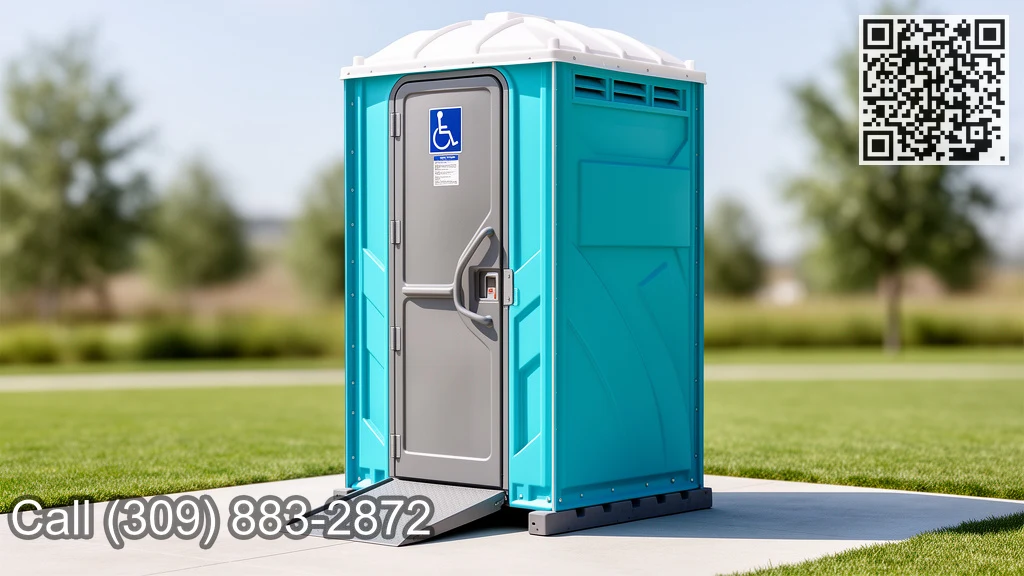
For a parent aiding an adult kid with a mobility disability, an accessible mobile washroom can be the difference in between attending and staying at home. For an expert utilizing a wheelchair at a memorial occasion, it can imply the difference between being welcomed and being sidelined. For an older grown-up whose equilibrium is not what it when was, adequate handling area and a stable entryway are not minor comforts. They are what make independent use possible.
That is why the 5 percent guideline deserves much more respect than it normally gets. It is a minimum that recognizes an evident fact: if portable restrooms are attended to the public, several of those restrooms should come in each cluster where they are offered.
When planners take that seriously, people see, typically quietly. The occasion feels much easier. The website really feels more thoughtful. Visitors invest less time problem-solving and more time taking part. That is what good gain access to does. It gets rid of friction prior to it turns into exclusion.
Getting it right is usually easier than repairing it late
The good information is that compliance here is not mysterious. The key points are clear. A minimum of 5 percent of systems in each collection have to be accessible. Short-lived events are consisted of. Obtainable devices should be understood the International Symbol of Accessibility. They have to have an easily accessible course and entryway, and any kind of needed ramps or landings need to satisfy ADA technical needs. The units themselves should please the relevant toilet-room technical policies, including clearances, transforming room, and appropriate grab-bar and water-closet requirements.
That might appear technological, however in technique it boils down to care, planning, and a readiness to assume from the customer's perspective. If you are leasing ada certified mobile bathrooms for an occasion or public-facing site, accessibility must be settled as early as quantity, servicing, and placement.
People seldom bear in mind the portable toilets at a well-run occasion, and that is generally a great sign. It means the facilities functioned, individuals found them, and nobody had to negotiate unneeded challenges simply to satisfy a basic requirement. For easily accessible guests, that ordinary experience is specifically the point.
 Ask ChatGPT
 Ask Grok
 Ask Perplexity
 Ask Claude
 Ask Google AI
 Ask You